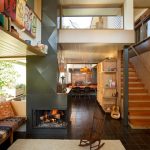
After submitting a design during a special elective course at the school of Architecture and Design in 2010, four students found themselves entering the U.S Department of Energy Solar Decathlon and representing New Zealand architecture off-shore. A year later we bring you the stunning finished result!


The house utilises simple strategies to minimise energy consumption and maximise solar energy, including PV polycrystalline panels and solar water heating panels on the roof of the house, energy efficient appliances, an intuitive home energy monitoring system and thick wool insulation.

Below is an extended version of the Q&A column with the designers, which appeared in our 2010 Aug/Sept issue.
What had to be included in the final design?
The challenge is to design, build and operate a cost-effective, energy-efficient and attractive solar powered house, which is then judged across ten criteria including market appeal, affordability, energy balance and comfort. The brief challenged us to think about sustainable living in a holistic way.
What motivated your design?
As we would be representing New Zealand on the international stage we wanted to represent our country and way of life. We wanted to take aspects of New Zealand lifestyle, culture, building and heritage, combined with innovation, creativity and ingenuity, to the U.S. – and to the world.
What makes this a stand out design?
We made a point of difference by orienting the entire design towards the outdoors – living spaces open up so that we can effectively live outside in summer and an internalised deck space allows for a sense of outdoor living during winter. We have incorporated a number of passive design strategies to both heat and cool the house, and a solar canopy minimises heat gains by shading the north-facing windows during summer.
What does Sustainable building mean to you?
‘Sustainability’ is a term that people define in many different ways. For us, the intention of the project is to illustrate how easy it is to run an energy-efficient and cost-effective home which at the same time enhances the way we live.
Was collaborating as a team a challenge?
Funnily enough working as a team proved to be a really enjoyable, rewarding experience! At the school of Architecture we don’t often get the chance to work together. Design is an iterative process and it is good to feed off each other.

Ben Jagersma, Anna Farrow, Nick Officer and Eli Nuttal are pictured with the model of their design.
To discover more about the First Light House, click here.