Q & A

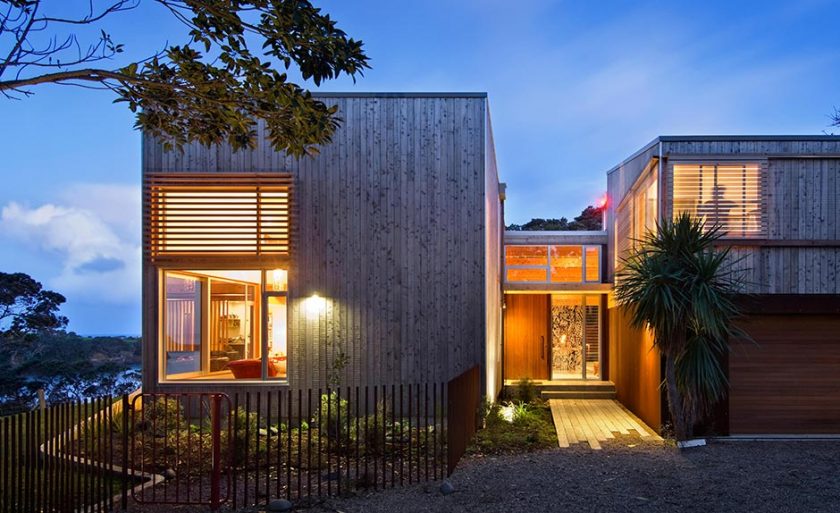
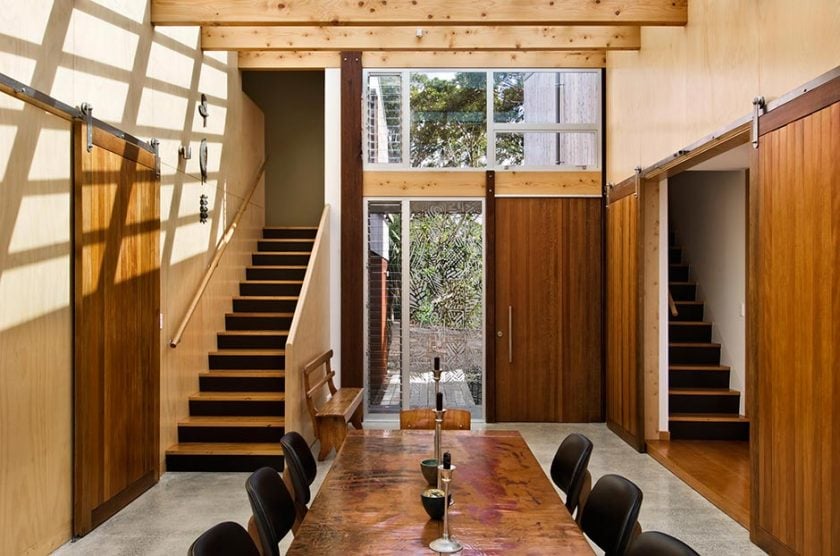
First Light House - The End Result

First Light House

After submitting a design during a special elective course at the school of Architecture and Design in 2010, four students found themselves entering the U.S Department of Energy Solar Decathlon and representing New Zealand architecture off-shore. A year later we bring you the stunning finished result!


The house utilises simple strategies to minimise energy consumption and maximise solar energy, including PV polycrystalline panels and solar water heating panels on the roof of the house, energy efficient appliances, an intuitive home energy monitoring system and thick wool insulation.


Below is an extended version of the Q&A column with the designers, which appeared in our 2010 Aug/Sept issue.


What had to be included in the final design?

The challenge is to design, build and operate a cost-effective, energy-efficient and attractive solar powered house, which is then judged across ten criteria including market appeal, affordability, energy balance and comfort. The brief challenged us to think about sustainable living in a holistic way.


What motivated your design?

As we would be representing New Zealand on the international stage we wanted to represent our country and way of life. We wanted to take aspects of New Zealand lifestyle, culture, building and heritage, combined with innovation, creativity and ingenuity, to the U.S. – and to the world.


What makes this a stand out design?

We made a point of difference by orienting the entire design towards the outdoors – living spaces open up so that we can effectively live outside in summer and an internalised deck space allows for a sense of outdoor living during winter. We have incorporated a number of passive design strategies to both heat and cool the house, and a solar canopy minimises heat gains by shading the north-facing windows during summer.


What does Sustainable building mean to you?

‘Sustainability’ is a term that people define in many different ways. For us, the intention of the project is to illustrate how easy it is to run an energy-efficient and cost-effective home which at the same time enhances the way we live.


Was collaborating as a team a challenge?

Funnily enough working as a team proved to be a really enjoyable, rewarding experience! At the school of Architecture we don’t often get the chance to work together. Design is an iterative process and it is good to feed off each other. 


Ben Jagersma, Anna Farrow, Nick Officer and Eli Nuttal are pictured with the model of their design. 


To discover more about the First Light House, click here

Q&A With Nathan Goldsworthy

Nathan Goldsworthy

In our current June/July issue of the magazine we spoke to talented furniture designer Nathan Goldsworthy about what New Zealand made and sustainable design means to him. We continue the interview here. 


Does the theme of sustainability translate into your process?

First I need to define sustainability in this context, these are some of the factors…

- the projected useful lifetime of the product 

- the material source, and efficiency of its use

- the processes used to manufacture the finished product

- the desirability of a product 

These factors are a major part of my design process and always have been; at least to the extent that they have been understood.


Nathan's most recent design is the Adjutant Desk which is held together by large wooden screws.


What does NZ made mean to you?

I think there is a lot of value in keeping the manufacture of product within New Zealand, but not at the expense of the quality or integrity of the product. This is where my products are currently manufactured, but I am interested in foreign suppliers as there are some things that simply cant be done here, or aren't available. I'm currently looking to Germany for a few components as the standard of quality is very high and they are very costly to source locally. 


What makes your designs stand out against other NZ furniture?

I honestly can't say. For me, I'm so intimately involved in the pieces I design that by the time they are finished products it is very hard to view them objectively. Plus, I'd prefer to leave that kind of critique to others!


What's next for you?

I have just relocated the business to Auckland, so am busy getting established and working more closely with Corporate Culture who represent my product in Auckland. I also have a few products that I need to get finished in the next few months and then I'd like to get back into client work. And the ultimate goal is to spend more time out of the office!


The large steel table is available in a range of colours and is a practical and stylish addition to any home. 


Check out Nathan's website for his latest designs and to discover more! 


Craft Mania - HANDMADE Q&A

craft symposium HANDMADE

Taking place over Queens Birthday weekend in Wellington is craft symposium HANDMADE. We talk to creator Melanie Walker, and her colleagues about the upcoming event.


Where did the idea come from? 

The concept started simply with the name of the event in the hairdressers chair and comes from an observation of the resurgence of craft. It also comes from a growing appreciation for handmade things and a move away from things that are mass produced as we see consumers looking for that unique item for their home or an original gift for a friend. Applying our years of event management experience, at Avenues Event Management, to an event about something as wonderful as all things handmade, has been really satisfying.


What is it all about? 

HANDMADE celebrates all the really cool and contemporary things that are happening in the handmade and craft space at the moment. It’s an opportunity for people to learn in workshops, watch demonstrations and surround themselves with handmade things in tours and presentations. It’s all about bringing a wide variety of crafts and skills, together into one event, making it accessible and a great place to try your hand at anything and everything. It also celebrates beautifully handmade things, it encourages people to spend time making while appreciating the talented and clever expert makers.


Do you have to be a craft-aholic to attend? 

HANDMADE is for everyone, whether you’re an expert maker, a beginner or you just simply appreciate the handmade skills of others. It is for people who perhaps are experts at one kind of craft but want to try something different. It’s for people who love a particular kind of craft and want to advance their skills. And it’s for people who love the idea of craft and just want to get making! There really is something to interest everyone and it is something that you can do with a group of friends or family.


What are the highlights of the weekend? 

Everyone loves a good party and how about one with shopping thrown in! A highlight of the weekend is definitely going to be the Meet the Makers & Pop Up Store Party. Where you can meet the teachers and even buy some of their handmade items!  Overall thought, the highlight of the weekend will be all the inspiration and creative energy that comes out of all these people who love craft and handmade things in one place – from people who’ve been doing it for years, the experts, the beginner and the people that really appreciate what other people make.


What’s next for the handmade team? 

This is the inaugural HANDMADE of what is intended to be an annual event. Excitement is definitely building and it really will be an inspiring weekend. We hope that people take away the skills, the ideas and simply enjoy spending time making things!


To find out more or buy tickets click here


Q&A With Lester Hall

in

Further to our artist profile on the work of Lester Hall (as seen on p.27 of our current Feb/Mar'11 issue), Soraya Nicholas continues with a Q&A on his work and what it means to be a New Zealander...


The Art of Lester Hall


What inspires you?

Our history and the human foibles that have created it, and finding clear windows to look through into our future; really good ink and beautiful paper; the sea and sailing on it.


What are you currently working on?

A six part series of my stamp based prints. I have a book in mind about my experience in life as a Pakeha male from the 50s. I need the artworks as illustrations!


The Art of Lester Hall


What does being a New Zealander mean to you? And how have you explored that concept in your past works?

Being a New Zealander means I am born into a secular, democratic meritocracy. I have a freedom as an individual that few in the past have enjoyed. To keep these freedoms we must each, on an individual basis, take some responsibility for the upkeep of our integrity in these regards. My Hories and Whities artworks were about who we have been and the track we took to get here. Through the use of a diary page format I was able to ask questions as a viewer of our history, not a student of it. The diary page is by nature somewhat hidden and secret. The format gave me permission to ask politically incorrect questions I wanted an answer too.


Is there anywhere our readers can go to view your work?

My website and in person at The Poi Room in Auckland, Soul in Hamilton and Kina in New Plymouth.


The Art of Lester Hall


Q&A with Dear Colleen

Dear Colleen, When life gives you lemons, Homestyle Magazine

Following on from our feature on Colleen Pugh and her art label Dear Colleen, in our Dec/Jan issue we talk to her further about her quirky and innovative designs. 


What process do you undertake to design each item? 

As my background is in graphic design I am an idea lead designer and work best with a few constraints to build an idea around. I usually start by thinking up a little brief like ‘design a tote bag that has something to do with shopping’ and then I go from there. Once I have a clear idea the rest happens pretty quickly.


How do you decide which colours to use? 

I just love bright colours, so my work usually ends up pretty vibrant. The exact choice is about helping communicate the over all idea of the piece, hence the piece about lemons is yellow.


What is your most popular print?

‘When Life Hands You Lemons Make A Gin And Tonic’ is by far my top selling print, but the ‘Dishes’ tea-towel is giving it a run for it’s money!


Tell us about the Dishes tea-towel. I understand there is a second one on the cards? 

I started receiving a lot of requests put my designs on tea-towels, and I didn’t want to just shove any old design on a tea-towel, I wanted to try and do something a little smarter and that’s when I came up with Dishes. The second one has just been released and came about because I had lots of emails asking me to do a version with Colin Firth! I have a third one on the cards in honour of the royal wedding next year.


How did you make the move from paper prints to tote bags and tea-towels? 

It was a market lead decision. There was a demand for more practical items rather than just prints so I just went with the flow!


What's next for Dear Colleen? 

I’m planning to take January off to really work out what comes next. I know I want to get a good e-shop up and running – so that’s a huge thing on my to-do list. I’m also going to work hard to become more of a voice for Indie Designers. And beyond that I have lots of designs sitting in my notebooks just waiting for me to make the time to bring them to life! 


With more designs set to be released throughout 2011, Dear Colleen is certainly one to watch and we can't wait to see what she comes up with next! You can follow Colleen through her blog or click here to purchase her work. 

Greenhouse Perth

in
Greenhouse Cafe in Perth
Greenhouse is an exciting new cafe in Perth with an emphasis on tasty, honest food and simple ideas for a non-destructive lifestyle. From the worm farm to the freshly baked bread the brains behind the Greenhouse called on local knowledge and advice to ensure they got it right the first time, from designers, engineers, builders, scientists, chefs and even farmers they left no stone unturned in their quest. Aiming to enhance the understanding of the human footprint they have created a cafe which blurs the line between functionality, beauty and sustainability. 


We talk to our in-house eco-expert Holly Brooker about her recent trip to this innovative and quirky cafe. 
 
How did you find out about the Greenhouse?
One of my best friends is an interior architect and had read about the Greenhouse online and told me all about it, and as soon as I got to Perth I made a bee-line for it as I wanted to see what it was all about!

What was your initial impression?
I was blown away. It is such an interesting place, very eclectic and there are so many incredible sustainable ideas evident in the place.  I was having coffee with an old friend and found it hard to concentrate because I wanted to see and touch everything and ask questions - I grilled the waitress a little as I was super excited - and was basically like wow wow wow!

What were you most impressed about? 

I love that the eatery has its own inner city vegetable garden surrounding the rooftop bar, which the chefs tend can collect fresh produce from.

Did the strong eco-philosophy affect the overall experience or quality of the food and coffee?
What I LOVE about the cafe is that is oozes inner city cool, yet fosters an underground eco mantra - it's not in your face 'hippy'. It is natural, real, urban and cool. The food and coffee is amazing, fresh, delicious and normal!  It is about making eco living realistic and practical.


Amazingly, the Greenhouse was constructed in only 6 weeks. Click here for a time-lapse of the construction.

Q & A With 326

homestyle Magazine
 
We talk to Richard Unsworth, Studio Alexander Design Director, about the innovative and quirky Drum Light - the latest product to come from New Zealand design collective, 326.

Who is 326?
326, is brand strategy and design business, Studio Alexander's 'Playtime' brand. It came from a desire to see some of our spare creative ideas and designs realised. It also allows us to step outside our traditional mediums, learn different skills and have a dialogue with new people.

Where did the idea of a Drum Light come from?
The drum light was an idea jotted down in a book some months ago. I'd always found the drum and stand aesthetically pleasing, this combined with a love of industrial lighting. At first it was a simple on off switch but we decided to push it further and make it sound activated so the user interacted more and the drum retained it's original function.

What makes this an outstanding piece of NZ product design?
I wouldn't like to beat our own drum but other people can.

What were the key elements in putting the Drum Light together?
The circuits, making it sensitive to a tap but not to other room noise. Finding the right stand and snare so the electronics and cable were not intrusive.

Does sustainability come into it?
It should be sustainable from the point of view of being long lasting and not an item to be replaced as fashion moves or cheap parts fail. We'd also love to use some secondhand snares, a little beaten up and worn, giving them a new lease of life.
 
 
To see more, or to purchase the Drum Light click here.
 

Q & A With Poetry and Cloth

in
Poetry and Cloth, artist Q & A, Kerri Devine

Continuing with the follow up from our Home Is Where The Art Is feature in the October/November issue, we have an interview with Kerri Devine from Poetry and Cloth.


Who is Poetry and Cloth?
I guess Poetry and Cloth is me, Kerri Devine. It is the name of my art business.

What sort of artwork do you create?
I make screen prints of the things that inspire me. I hand print my original designs onto linen which I often stretch around canvas' so they can be hung on the wall. I also use my prints on cushions, bags, tea towels and even furniture! I love upcycling old chairs and stools with my designs. I am a trained fine art photographer as well.


A screen printed chair, and Harmony print from Poetry and Cloths range.


How did you get into it?
I had done photography for many years but was always wondering how I could use my photos in a more artistic, handmade way. I saw an ad for a screen printing workshop run by Carla Watson from Imprint, and decided to give it a go. Needless to say I loved it and haven't looked back!


Cherry Leaf and New Life photographic prints by Poetry and Cloth.


What is inspiring your work at the moment?
At the moment I am absolutely obsessed with the new leaves appearing on all the trees. I have spent many mornings out early trying to capture the glow of first light on these gorgeous new leaves. One morning I took 176 photos! I would have taken more but I was on my way somewhere! I am also designing new screen prints around the leaf theme, amongst others.


How would you describe your workspace?

I am very lucky to have quite a large room in my house as a studio. I have my printing table in there as well as just about every thing I have ever found that inspires me. It is full of mossy twigs, river rocks, skeleton leaves, seed pods, dried wild fennel, old handwritten postcards, shells, birds nests . . .


Inside Kerri's studio space.


What tips do you have for displaying art at home?
Firstly I would say don't display anything unless you absolutely adore it. Learn what you love and let that guide you. I think little groupings of your favourite items can be really beautiful. When you display things make sure that they take centre stage and don't have to compete with lots of other items. You want to draw the viewers eye to what you love best. Keep it simple, but interesting. It's also fun to think of unexpected ways or places to display art. Even a simple string line with your favourite images on it is beautiful. Also there's no reason why you can't hang a beautiful branch or seed pod on your wall. 'Art' is very subjective.


Prints and Mixed Media works by Dolan Geiman.


Which artists work are you coveting at the moment?
I am wildly, jealously in love with Dolan Geiman.


Thanks to Kerri for giving us a glimpse into her life. Poetry and Cloth artwork can be purchased from Felt.
 

Q & A With The Lovely Sweet William

in
Sweet William illustration


While putting together the 'Home Is Where The Art Is' feature for our current issue, I was lucky enough to be in contact with a range of artists from around the country. So we thought we would take the oppotunity to share a little more on their working processes and what inspires their work. First up are sisters Shelley and Paula who are the duo behind Sweet William.


If you happen to be in the Wellington area on October 30th, make sure you swing by Craft 2.0 and say hi to the lovely ladies of Sweet William, as they will be having a stall there.


Who are Sweet William?
Sweet William is Paula Mills, a Melbourne-based artist & illustrator and one half of a creative collaboration between Paula and her sister, Shelley, who lives in Wellington. We are both originally from South Africa, have moved around quite a bit and felt the need to connect creatively.


What do you make?
Sweet William is mostly paper goods, art prints, cards, gift tags, garlands, calendars, mixed paper packs.  We also have a small range of small softies and art cushions.  The range is based on the Illustration work of Paula.


Sweet William illustrations, and The Madonna and Child illustration and art cushion


How did you get into it?
Paula studied commercial art and graphics and enjoyed a career as an art director and graphic designer. "Once my babies came along and after tragically losing my mother, I found my self turning back to my love of drawing and painting and embarked on a new career as an illustrator'  Shelley has a background in education, but has always been a maker, and has a particular love for textile art.  "I knew Paula and I could make a wonderful team, combining our love for the creative, ecclectic and hand-made".

Your work is a collaborative effort, how does this work?
It is quite hard to define.  We just have similar things that inspire us and are always having conversations about what we could do, or what we could try out.  On a practical level, Paula is the illustrator, and Shelley is making a range of items based on the illustrations - for example - Paula illustrated a lovely image of The Madonna and Child, and Shelley turned it into a fabric art cushion.

What is inspiring your work at the moment?
Our creative work draws on quite a lot of nostalgia and childhood memories.


Paula's studio space, Sweet William prints cleverly displayed on clipboards and a collection of favourite objects displayed on the mantle.


Describe your workspace?
This is reflected in our home with vintage finds -  we love old, interesting things that have a bit of a story, and beautiful objects made in a time when things were made to last a lifetime, not from the disposable society we currently live in. We need to be surrounded by things that inspire us. We love the quote by William Morris; 'Have nothing in your house that you do not know to be useful, or believe to be beautiful'.

What tips do you have for displaying art at home?

We are loving groupings and clusters of art works, montages and moodboards.
Don't be afraid to experiment with placing artwork on mantels and shelves and in interesting and unpredictable places.


Illustrations by Lisa Chow


Which artists work are you coveting for you own home at the moment?

We have a blog where we list our loves and finds - and we frequently feature artists we are inspired by.  We recently featured artist  Lisa Chow a Houston based illustrator.


Thanks to Shelley and Paula for sharing some of their ideas and inspiration. Their work can be purchased via Felt and Etsy or click here to follow Sweet William on their blog.


Sustainable Design

Rakai is pictured here in front of the display wall which illustrates some of the stunning designs by Aroha & Friends.
Each work is available either a print for the wall or on a t-shirt. 


In our Aug/Sept we spoke to Rakai Karaitiana from Napier store Aroha & Friends, and their ongoing promotion of New Zealand Made. We continue the interview here. 


How did the eco-printing side of your store come about? 

I always wanted to set up a print studio and pestered my wife for us to make the move and make it happen. Late in 2008 I decided to just start with a basic set-up so we purchased some screens and a light which cost around $200 and started printing on a table in the shop. We had to hand iron the t-shirts to set the inks because we had no fancy flash drier, this was pretty labour intensive and the staff found themselves having to do a bit of ironing in those early days. During that summer we did well enough to look at buying a carousel and flash unit, and it just grew from there. 


Do you believe that consumers are more aware of sustainable items?

I would have to say that in general most people don't really care, it's unfortunate but it seems that eco friendly clothing is not really a priority. People don't know that most cotton contains pesticides, and GMO's to combat those pesticides; they also don't know about PVC's and Phthalates that are used in the screen printing industry which are also high in toxins. We try to inform people of what we do and why we do it and believe that in time it will become a priority in consumer decision making.

With that said we are always encouraged when we meet customers who really appreciate the approach we take. Eco friendly products will catch on, at the moment it's a small niche market, it's just going to take time to seep in to the mainstream.


How important is New Zealand made and sustainability?

One of the greatest things about using water based inks is the soft feel the print has, it is something that consumers are into and we have noticed this change in consumer attitudes. They are over the plastic, heavy feel of traditional screen printing and it's just a bonus that it's printed with eco friendly inks. Buying New Zealand means sustainability. We are sustaining the industries and people involved in our product and we know where everything in that product comes form.


Aroha & Friends is a family operated Napier based clothing store, art gallery and boutique printing outlet with a focus on New Zealand and sustainable design. 


How many designers do you have coming up with designs? 

Primarily it has been me and a french guy, Syvain. We have friends and artists who supply us with designs as well. At present I'm working with our local Kura Kaupapa to develop a Maori youth design group. We are looking at taking their work and applying them to various products.


What's next for Aroha & Friends? 

To keep expanding our ideas and range of products and keep growing. I don't want to give away too much but we are always working on new work and I have a heap of stuff already designed that I need to produce. We'll keep it coming and you'll just have to keep an eye out for it! 


Branching out into cushions there is always something new to discover from these talented designers! 


Syndicate content